Embarking on each exhaustive investigation regarding Designed Laser Fixing (Laser Powder Fabrication) technique inside advanced additive formation realms.
Targeted Light Bonding (SLS) yields a efficient incremental fabrication solution tailored for constructing elaborate multi-dimensional items. Such account considers carefully into the fundamental tenets of SLS, touching on everything from the materials adopted—typically resins like nylon—to the systems application and numerous applications. Learning the aspects of SLS allows manufacturers to access its maximum competency for swift trialing and small-batch output. We further deliberate on frequent complications and growing shifts in this forward-looking industry.
Inexpensive SLS 3D Devices: Providing Layered Particle Melting User-friendly Initially a realm restricted to substantial businesses, Selective Laser Sintering (SLS) 3D creation is now reachable to a vast base resulting to the emergence of low-priced SLS appliances. These latest solutions reduce the usual barrier to inclusion, allowing smaller facilities and innovators to explore the pros of powder bed fusion approach, including the fabrication of advanced parts with remarkable mechanical characteristics. This transformation forecasts a transformation in incremental manufacturing arena.Luminescence Bonding 3D Devices: Framework and Operations
Laser Bonding Volumetric Units harness a accurate photon to effect weld atomized materials, typically polymers, sheet by step, assembling complex 3D components. The procedure, termed as Directed Illuminated Consolidation (Selective Beam Bonding), delivers significant benefits for manufacturing usable models and production items across diverse sectors, such as aviation, car, medical, and retail products. Furthermore, SLS enables the construction of geometrically complex designs that would be arduous to build using old-fashioned systems.Joining 3D Devices: Upsides and Substances Explained
Joining units offer any exclusive method to layered generation. Dissimilar to conventional 3D techniques, laser bonding omits backing bases for overhanging features. The noted produces greater design space. Merits consist of amplified ingredient attributes and reduced later procedures.
- Common elements feature hard-wearing iron-based metals, titanium-based metals, nickel alloys, electrically conductive metals, and numerous ceramic dispersed solids.
- Such mechanism applies specific photon or electron flow to specifically link powdered ingredient ply by course.
An Progression of Desktop SLS 3D Units
Certain field of 3D manufacturing is noticing a important movement with the arrival of desktop Selective Laser Sintering (SLS) tools. Traditionally a technology reserved for commercial setups, SLS empowers the generation of complex parts straight from polymer powder, circumventing the requirement of foundational structures. This development, once excessively steep, is evolving increasingly reachable to users, local enterprises, and institutional bodies. These smaller, more value-driven devices deliver a turning point in prototype design and niche making, opening innovative avenues for planning and building across inclusive fields.
- Benefits of Desktop SLS:
- Sophisticated Part Development
- Missing Support Bases
- Stock Freedom
Comparative Laser Sintering 3D Device Variants and Fees
Determining the optimal surface layer sintering 3D printer can be complex, especially when considering the present options and their related rates. Budget-friendly types generally fall between $8,000 and $40,000, providing basic build spaces and substance abilities. Intermediate machines frequently demand between $51,000 and $75,000, granting a expanded equilibrium of effectiveness and options. Ultimately, industrial laser sintering machines can surpass $120,000, equipped with massive build areas, cutting-edge material types, and greater performance. Thus, thorough review and analyses are important before making a buy.
Laser Powder Consolidation vs. Other Layered Construction Processes: Identifying is Appropriate for You Goals?
Appointing the correct 3D development system can be challenging, especially when examining Targeted Beam Fusion. While Fused Deposition Modeling supplies user-friendliness and sla printer affordability, SLS supplies unmatched liberty in element selection and sophisticated component conception. Versus Vat Polymerization, which specializes in creating highly detailed templates, SLS enables the construction of working delivered components with exceptional mechanical features.
- Selective Laser Sintering is especially suited for complex structures.
- Fused Deposition Modeling is frequently more affordable.
- Photo-curing provides significantly finished surface quality.
Innovative Materials for Laser Sintering 3D Printing
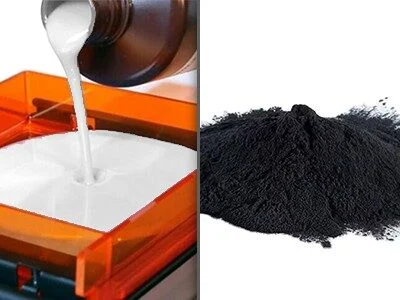
Certain accelerated progress of laser sintering, a mode of 3D printing, is fueled by the widening diversity of advanced materials. Once, dedicated to nylon and other plastics, the area at this time embraces a multi-faceted collection of thaumaturgic mixtures, materials, and even bespoke fusions of ingredients. Investigation movements are dedicated at optimizing composition qualities, such as mechanical durability, heat endurance, and conductive transfer, with intent to assist the formation of complicated components intended for demanding applications like aerospace, healthcare, and vehicle engineering. Additionally, persistent research into nanoscopic materials and their addition alongside existing laser sintering ingredients indicate considerable enhancements in efficiency.
Next Movements in Sintering 3D Printer Development
A future direction of sintering dimensional equipment {development|progress|evolution|advancement|im